Where to eat in Tenerife: guachinches and fish
Updated 18 November 2026. Rules and restaurant details checked the same day.
Eating well in Tenerife is mostly a matter of leaving the seafront menus behind. In the hills of the north, farmers open guachinches for a few months a year to sell their own wine with a few home-cooked dishes. Along the coast, small harbours serve the day’s fish, and the big hotels of the south are home to most of the island’s Michelin-starred restaurants. This page lays out a food day in the north, then the dishes to try, how a real guachinche works and where to eat by area.
Quick answer
- Try: papas arrugadas with red and green mojo, rabbit in salmorejo, local goat’s cheese, grilled fish and gofio.
- Guachinches: farm restaurants of the north serving their own wine and up to three dishes, open a few months a year.
- Fine dining: most of the island’s Michelin-starred tables are in the south, many in the big hotels of Costa Adeje.
- With a guide: a food tour of La Laguna covers the market and the tapas bars.
On this page
- A food day La Laguna to Puerto de la Cruz
- What to eat papas, mojo, rabbit
- Guachinches own wine, three dishes
- By area
- Michelin mostly in the south
- Where to stay
- FAQ
On this page
Food and wine tours
We may earn a commission when you book through our links. How it works
A food day in the north, hour by hour
The north is where most guachinches are and where the island’s wine is made. This day follows the TF-5 motorway from La Laguna to Puerto de la Cruz.
- La Laguna marketThe town market of La Laguna, on Plaza del Cristo: fruit, cheeses, mojo and gofio to take home.
- Casa del VinoIn El Sauzal, the island’s wine house: a tasting of 3 island wines and 3 local bites for €16.
- Lunch in a guachincheIn the hills of the Tacoronte-Acentejo wine area: the owner’s wine and two or three dishes of the day.
- Puerto de la CruzA walk on the seafront of Puerto de la Cruz and the old fishing harbour.
- Dinner by the seaGrilled fish and papas arrugadas in the old town, or a Michelin tasting menu if you booked months ahead.
A guachinche opens only for part of the year: look for the official plaque at the door and the notice of its opening period. Whoever drives must stay off the wine.
Food and wine tours
Tenerife Gastronomy Tour with Two Winery Visits and 4-Course Lunch
The Casa del Vino and Bodegas Monje with their tastings, a 4-course lunch and La Laguna, with no one in your group driving.
8 hours
Free cancellation
WineFull dayfrom €85
Booked on Viator
What to eat in Tenerife
| Dish | What it is |
|---|---|
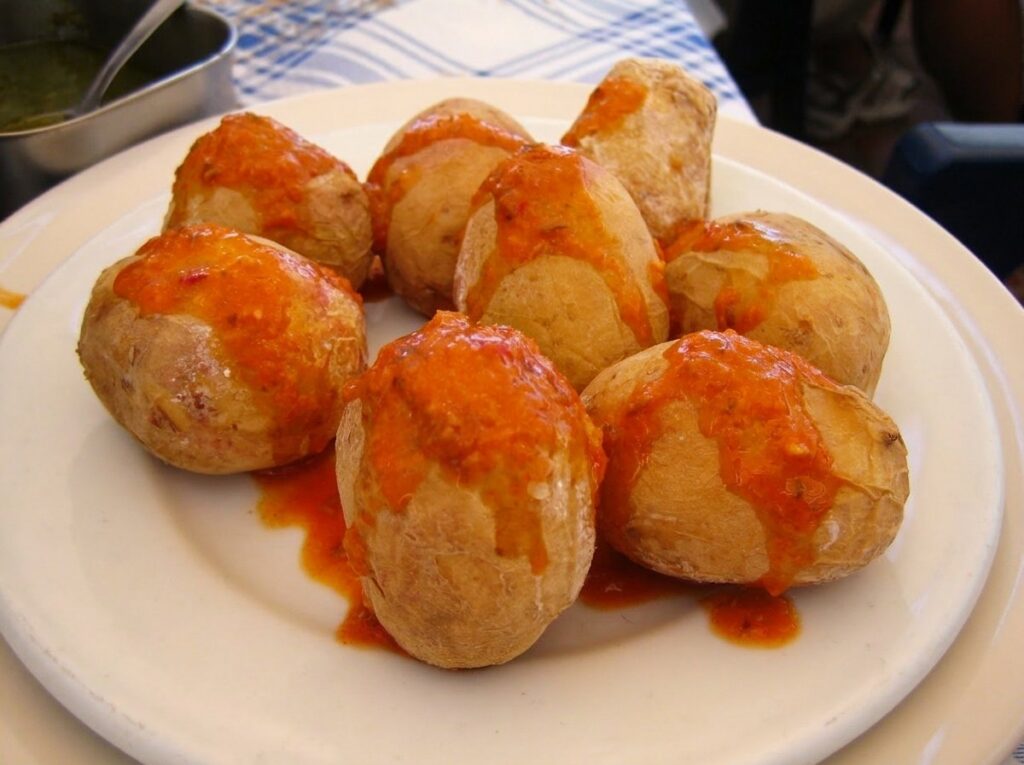
| Papas arrugadas | Small potatoes boiled in their skins in salted water until the skins wrinkle, served with mojo |
| Mojo picón (red) | A sauce of peppers, garlic, cumin, paprika, olive oil and vinegar |
| Mojo verde (green) | The milder green sauce, made with parsley and coriander |
| Conejo en salmorejo | Rabbit in salmorejo sauce, the classic dish of the north and the countryside |
| Gofio | Toasted grain flour, eaten on the island since the time of the Guanches |
| Goat's cheese | Cheese made mostly from the milk of the native Tenerife goat |
| Grilled fish | Fish from the island's harbours, with papas and mojo |
Potatoes have a story of their own. They reached the Canary Islands in the 16th century, a local tradition dates one of the first fields of Tenerife to 1622, at Icod el Alto, and some of the old varieties are still farmed: since 2012, 29 of them have been protected by the European designation Papas Antiguas de Canarias. The negra, bonita and azucena varieties are the favourites for papas arrugadas. Gofio has had its own protected designation since 2012 too.
Guachinches
A guachinche is where a farmer sells the year’s wine at home. The tables are often folding ones, the tablecloths paper and the menu short. The Canary Islands government set out the rules in 2013, after many places started using the name without being anything of the kind:
- The wine must come from the owner’s own vineyards and be made by them.
- A guachinche opens for four months a year at most, and closes when its wine runs out.
- It may serve up to three cooked dishes, plus pickles, nuts and fruit from the farm.
- Only its own wine and water are served: no beer, no soft drinks.
- It must be in the farmer’s house or farm buildings, with an official plaque by the entrance and a notice of its opening period and hours.
Places that serve a long menu, beer and cola under the name are restaurants, often good ones, but not guachinches in the legal sense. Most real ones are in the hills of the north, around the wine areas of Tacoronte-Acentejo and the Orotava valley. For the wine itself, see Tenerife wine tasting.
Where to eat, area by area
| Area | What it does best |
|---|---|
| La Laguna and Santa Cruz | The two cities: markets, tapas bars and cafés |
| The north: La Orotava, Puerto de la Cruz, Tacoronte | Guachinches, traditional cooking and the wine country |
| The south: Costa Adeje, Los Cristianos | Fine dining in the big hotels, international restaurants and the harbours |
| Isla Baja: Garachico and the north-west | Fish by the sea, near the Teno mountains |
The island’s tourist board splits Tenerife into these four food areas. In the resorts of the south, the menus on the seafront are made for visitors; the small harbours, such as La Caleta in Costa Adeje, and the hill villages inland are where local cooking is easier to find.
Michelin-starred restaurants
Most of the island’s Michelin-starred restaurants are in the south, many of them in the big hotels of Costa Adeje. Two examples, one in the south and one in the north:
- El Rincón de Juan Carlos, in La Caleta, Adeje: two Michelin stars, the creative cooking of the brothers Juan Carlos and Jonathan Padrón, in the Royal Hideaway Corales hotel.
- El Taller Seve Díaz, in the old town of Puerto de la Cruz, a few steps from Plaza del Charco: one Michelin star, two seasonal tasting menus built on Canarian produce. It takes its own bookings, is closed on Sundays and Mondays, and is booked up months ahead.
The guide’s selection changes every year: check its current list before you book.
Where to stay for the food
The north puts the guachinches and wineries within a short drive.
Where to eat questions
What is a guachinche?
A farm restaurant where a wine grower sells their own wine with up to three home-cooked dishes. By law it opens for four months a year at most, in the farmer’s own buildings, and serves only its own wine and water.
What food is Tenerife known for?
Papas arrugadas with red and green mojo, rabbit in salmorejo, goat’s cheese, grilled fish and gofio, a toasted grain flour eaten since the time of the Guanches.
What are papas arrugadas?
Small potatoes boiled in their skins in salted water until the skins wrinkle, served with mojo. Old local varieties, protected as Papas Antiguas de Canarias, are the ones to look for.
Where are the Michelin-starred restaurants in Tenerife?
Mostly in the south, many in the big hotels of Costa Adeje, such as El Rincón de Juan Carlos in La Caleta; El Taller Seve Díaz is in the old town of Puerto de la Cruz.
How do I recognise a real guachinche?
It shows an official plaque by its entrance and a notice of its opening period, serves only its own wine and water, and offers no more than three cooked dishes.
Read next
- Tenerife wineThe wineries and the Casa del Vino
- La LagunaThe old town and its market
- Puerto de la CruzThe best base for the north