Natural pools in Tenerife: where to swim
Updated 18 November 2026. Pools, Blue Flags and safety advice checked the same day.
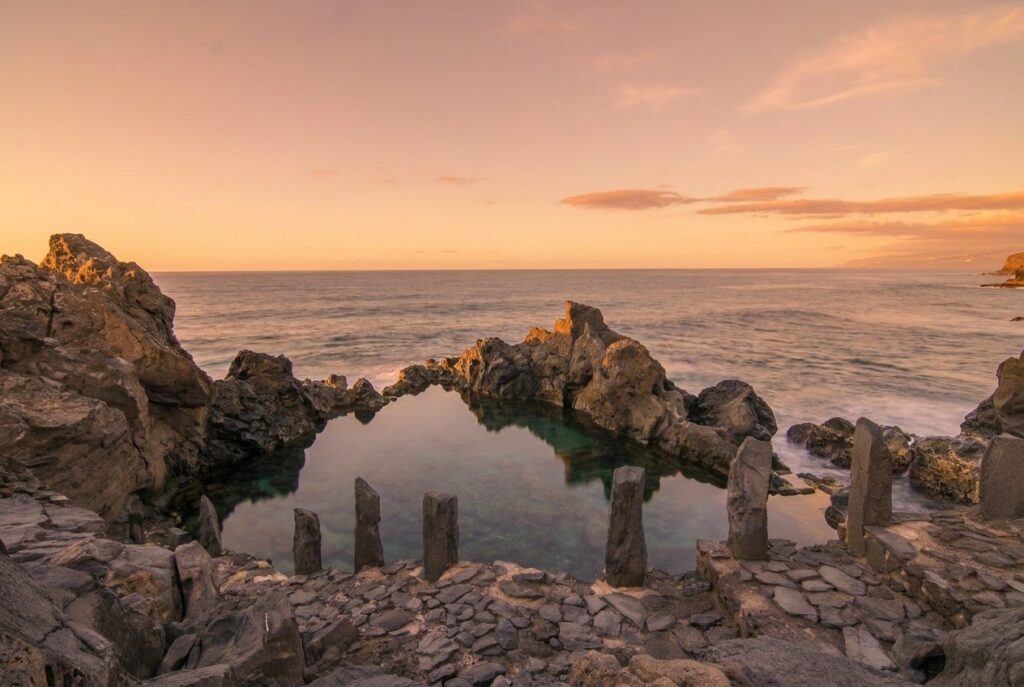
Where lava ran into the sea, it left rock basins that the Atlantic refills with every tide. On the north coast, where the beaches face big waves, these natural pools are where people swim, and some towns have built pools beside them with ramps, showers and lifeguards. This page lays out a day of pools on the north coast, then the best pools, the tides and the safety rules that matter more here than anywhere else.
Quick answer
- The best-known: El Caletón in Garachico, rock pools left by the lava of 1706.
- With services: Bajamar and Jóver in La Laguna, both with a 2026 Blue Flag; Bajamar has lifeguards and a children’s pool.
- Wild and beautiful: Charco del Viento in La Guancha and Charco de la Laja in San Juan de la Rambla, on calm days only.
- Safety: stay out when a coastal warning is in force, and keep away from the edge when waves break over the rocks.
On this page
- A day of pools the north coast, east to west
- Best pools north, west and south
- Seawater pools Lago Martiánez, Santa Cruz
- Safety sea warnings, 112
- FAQ
We may earn a commission when you book through our links. How it works
A day of natural pools, hour by hour
The north coast has the most pools. This day runs west along it, from San Juan de la Rambla to Los Silos, and works best on a calm day with low tide in the morning. Guided day tours of the north-west stop in Garachico, along with Icod de los Vinos and Masca.
- Charco de la LajaSan Juan de la Rambla. Down the coastal trail to a rock pool that is calm and clear at low tide, on a day of low swell.
- Charco del VientoLa Guancha. Through the banana plantations to a bay enclosed by two tongues of lava, good for snorkelling.
- Lunch in GarachicoThe restaurants near El Caletón specialise in seafood.
- El CaletónThe rock pools left by the lava of 1706, next to the San Miguel castle.
- Los SilosThe Charco de Los Chochos and the Charco Don Gabino, two quieter pools on the coast just west of Garachico.
Tides move by about an hour each day: check the tide table and the sea warnings that morning, and swap the order if needed.
Days out on the north coast
Tenerife North: Teide, Icod, Garachico and Masca – Guide included
Garachico and its port on a day that also takes in the dragon tree of Icod and the Masca viewpoints.
8 to 9 hours
Free cancellation
GarachicoGuided dayfrom €58
Booked on Viator
Tenerife Grand Tour: Mt Teide, Masca, Icod and Garachico Day Trip
The whole north-west in one day, from the volcano down to the coast.
9 hours
Free cancellation
IslandGrand tourfrom €58
Booked on Viator
Car rental in Tenerife South Airport
The pools of the north coast are easiest to reach with your own car, at the right tide.
Prices from several companies
CarFreedom
Booked on Localrent
The best natural pools
| Pool | Where | What to expect |
|---|---|---|
| El Caletón | Garachico, north-west | Lava pools by the San Miguel castle, suitable for everyone on calm days |
| Charcos of Los Silos | Los Silos, north-west | Los Chochos, Don Gabino and El Cumplido, with clear water |
| Charco del Viento | La Guancha, north | A bay sheltered by two tongues of lava, reached through banana plantations |
| Charco de la Laja | San Juan de la Rambla, north | Calm only at low tide and on days of low swell |
| Bajamar | La Laguna, north-east | Two large pools and a children's pool, lifeguards, Blue Flag 2026 |
| Jóver | Tejina, La Laguna | Freshwater shower, reduced-mobility access, Blue Flag 2026 |
| Mesa del Mar | Tacoronte, north | Two pools, one filled only in summer; a steep, winding road down |
| La Jaquita | Alcalá, Guía de Isora, west | Pools along the promenade, showers, toilets, Blue Flag 2026 |
El Caletón, Garachico
The pools of Garachico formed when the lava of the Trevejo volcano reached the sea in 1706, burying much of the town. They are the easiest pools on the island to enjoy, next to the San Miguel castle, and they get crowded in summer. The water is usually calm, but the sea outside can be rough: watch the waves.
Bajamar, Jóver and El Arenisco, La Laguna
The coast of La Laguna has three Blue Flags in 2026, all of them pools. Bajamar has two large pools and a smaller one for children, changing rooms, lifeguards, ramps and handrails, which makes it the best choice for families and for people with reduced mobility. Jóver, in Tejina, is a quiet spot with a view of the Punta del Hidalgo lighthouse and a freshwater shower; El Arenisco is the third.
The wild pools of the north
Charco del Viento and Charco de la Laja are natural basins of black lava, open to the ocean, with clear water and few services. They are lovely on a calm day and dangerous when there is a swell: go only when the sea is flat.
Car
Car rental in Tenerife South Airport
Prices from several rental companies for your dates
Pools built by the sea
Two seawater complexes designed by the artist César Manrique give the calm of a pool with the sea next door:
- Lago Martiánez, on the seafront of Puerto de la Cruz, a complex of seawater pools and lagoons next to Martiánez beach.
- The César Manrique maritime park in Santa Cruz, 22,000 m² of pools on the waterfront of the capital.
Both have set opening hours: check them before you go.
Safety in natural pools
Natural pools look safe, and on most days they are. When there is a swell, they are not: a wave bigger than the rest can break over the rocks, fill the pool and pull swimmers out. Waves come in sets, so a few calm minutes do not mean the danger has passed.
Before you go
- Check the coastal warnings from Aemet, the Spanish weather agency, and the Canary Islands government. When a coastal pre-alert or alert is in force, do not swim in natural pools.
- Check the tide table: some pools are only calm at low tide, others are deeper and better at high tide.
- Look at the sea for a few minutes before going in: if waves break over the edge of the pool, stay out.
At the pool
- Respect closures, signs and lifeguards’ instructions, and never swim with a red flag.
- Keep away from the outer edge, where waves break, even if the sea suddenly calms.
- Do not dive in: pools are shallow and the rock is close under the surface.
- Wear water shoes: wet lava is sharp and slippery, and sea urchins live in the cracks.
- Never turn your back on the sea when you are on the rocks.
The island’s emergency service, 112 Canarias, gives this advice for rough seas: avoid isolated places you do not know or that have no lifeguards, keep away from rocks and breakwaters where waves break, and if you are swept away, stay calm, do not swim against the current and wait for help. To call for help, dial 112.
Natural pool questions
What is the best natural pool in Tenerife?
El Caletón in Garachico, for its setting and its calm water on most days. For lifeguards and services, Bajamar in La Laguna, with a 2026 Blue Flag.
Are the natural pools safe?
On calm days, yes. When there is a swell, waves can break over the rocks and pull swimmers out: check the coastal warnings, and stay out if waves reach the edge of the pool.
Do the natural pools have lifeguards?
Some do, such as Bajamar. At the wild pools of the north, such as Charco del Viento and Charco de la Laja, do not count on one: swim only when the sea is calm.
Are there natural pools in the south of Tenerife?
Fewer than in the north, where the sea is rougher. In the west, La Jaquita in Alcalá has pools along its promenade, with a 2026 Blue Flag.
Do I need to check the tide?
Yes. Charco de la Laja is calm only at low tide, while other pools are deeper at high tide. Tide tables are published for each day.
Read next
- GarachicoThe town around El Caletón, rebuilt after 1706
- The best beaches in Tenerife, golden and blackGolden and black sand beaches, and the 2026 Blue Flags
- Snorkelling with turtles in TenerifeClear water and fish with a mask and fins